
——News/blog——
News/blog
Related suggestion
- Temperature & Shading: Impact on Mono vs Poly PanelsBefore we start analyzing the effects of temperature and shading, it's crucial to first understand the difference between monocrystalline (mono) and polycrystalline (poly) solar panels.Industry News
- Dual-Purpose Rooftops: Combining Solar Power & AgricultureEver gazed up at a city skyline and wondered about the untapped potential of all those rooftops? Today, let's dive into the world of dual-purpose rooftops, a revolutionary concept that merges solar power with agriculture.Industry News
A photovoltaic inverter is a type of power electronic device used to convert the direct current generated by photovoltaic panels into alternating current (AC) for connection to the grid or for use in the field. PV inverters play a vital role in solar PV systems as the current and voltage generated by the solar panels are DC and cannot meet the demands of the grid or some AC loads.
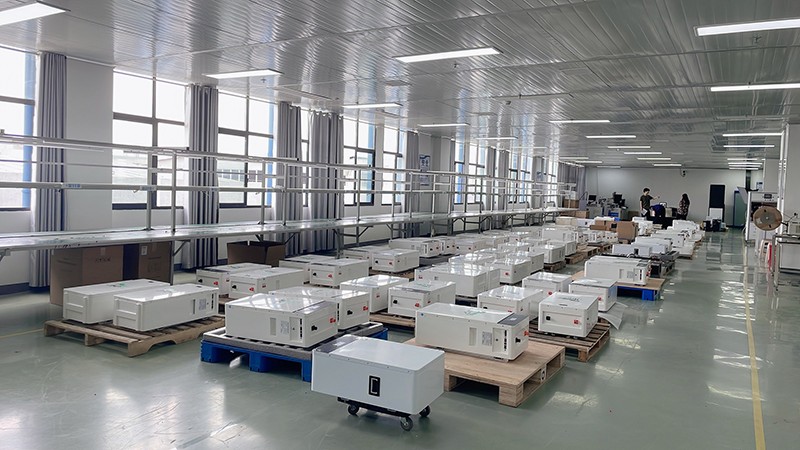
Introduction about PV inverter
Inverter, also known as inverter power supply, is a power conversion device, which can convert 12V or 24V DC power into 240V, 50Hz AC power or other types of AC power. Its output AC power can be used for all kinds of equipment, to maximize the mobile power supply place or no power area users of AC power needs.
With the inverter, you can use DC power (battery, switching power supply, fuel cell, etc.) into AC power for electrical appliances to provide stable and reliable power protection, such as laptop computers, cell phones, handheld PCs, digital cameras, and various types of instruments, etc.; inverter can also be used with generators, can effectively save fuel, reduce noise; in the field of wind energy, solar energy, the inverter is indispensable. Small inverters can also be used in cars, boats, portable power supply equipment, to provide AC power in the field.
Inverter has a wide range of uses, it can be used in all kinds of transportation, such as cars, all kinds of ships and aircraft, in the field of solar and wind power generation, inverter has an irreplaceable role.
Principle of operation
Inverter is a kind of direct current to alternating current (DC to AC) transformer, as the name suggests is the reverse voltage, it is in fact with the Adapter Adapter is a kind of voltage inversion process, Adapter is the utility grid AC voltage into a stable 12V DC output, and the Inverter is the Adapter output of 12V DC voltage into a high-frequency high voltage AC. The Inverter converts the 12V DC voltage output from the Adapter into high frequency high voltage AC. Nowadays, inverters generally adopt PWM (Pulse Width Modulation) technology, so as to obtain high-power and high-efficiency AC inverter output.
Main components
1. Input interface part:
Input part usually has 3 signals, 1) 12V DC input voltage, 2) work control voltage, 3) Panel current control signal. The DC input voltage is provided by the DC output from the Adapter, and the working control voltage is provided by the control chip on the main board, and its value is 0 or 3V. When the working control voltage is =0, the Inverter does not work, and when the working control voltage is =3V, the Inverter is in the normal working state; while the current control signal voltage is provided by the main board, and its range is from 0 to 5V, and different values of current control signal are fed back to the Inverter. The current control signal voltage is provided by the motherboard, which varies from 0 to 5V. Different values of the current control signal are fed back to the feedback terminal of the PWM controller, and the current provided by the Inverter to the load will also be different; the smaller the value of the current control signal is, the larger the current output from the Inverter will be.
2. Voltage starting circuit:
When the working control voltage is high, it will output high voltage to light up the backlight tube of Panel.
3. PWM controller:
It has the following functions: internal reference voltage, error amplifier, oscillator and PWM, over-voltage protection, under-voltage protection, short-circuit protection, and output transistor.
4. DC conversion:
The voltage conversion circuit is composed of MOS switching tube and energy storage inductor. The input pulse is amplified by push-pull amplifier and then drives the MOS tube to do the switching action, so that the DC voltage charges and discharges the inductor, so that the other end of the inductor can get the AC voltage.
5. LC oscillation and output circuit:
Ensure that the lamp starts 1500V voltage, and after the lamp starts to reduce the voltage to 800V.
6. Output voltage feedback:
When the load is working, feedback sampling voltage is used to stabilize the voltage output of the Inverter.
Inverter is generally a multi-channel input, a high-voltage output, if for a large screen TV in the internal multiple lamps LCD Panel, generally using multiple inverter boards or multiple inverters separate output. For the inverter, because of its work will produce high voltage, so for the internal inverter transformer, PCB, output socket in the production process, many customers require the use of materials and components that can meet the standard safety and fire rating requirements to ensure the safety of their products.
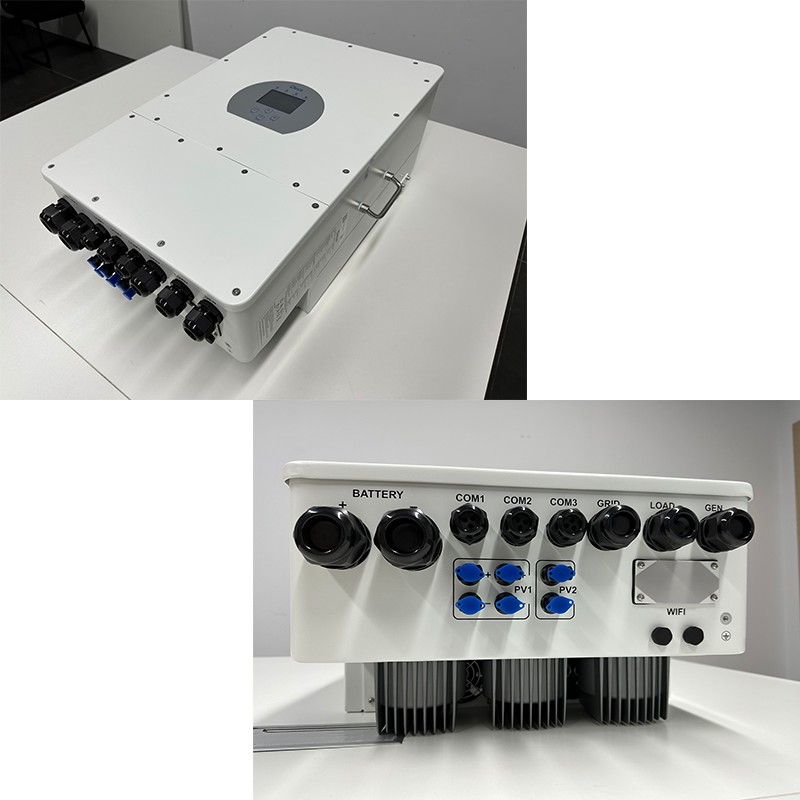
Protection functions of PV inverters
PV inverters usually have various protection functions, such as over-voltage protection, under-voltage protection, over-temperature protection, etc., to protect the panels and the inverter itself. PV inverters usually have the following protection functions:
Over-voltage protection: When the output voltage of the PV panel exceeds the maximum voltage designed for the inverter, the inverter will automatically cut off the circuit to avoid circuit overload and damage.
Undervoltage protection: When the PV panel output voltage is lower than the inverter's operating voltage range, the inverter will also automatically cut off the circuit to ensure system safety and panel protection.
Temperature protection: PV inverters need to work within a certain temperature range. When the temperature of the electronic components exceeds the tolerable range, the inverter will automatically reduce the working current or lower the output power to minimize the temperature of the components and protect the system.
Short-circuit protection: When the output circuit of PV panel is short-circuited, the inverter will cut off the circuit immediately and automatically to protect the system and avoid the short-circuit current is too large to cause safety accidents.
Overload Protection: When the system load is too large, or a temporary current spike occurs, the PV inverter will automatically limit the output power to avoid circuit overload and damage.
Ground protection: In case of poor electrical grounding or grounding equipment failure, the inverter will also automatically cut off the circuit to protect the operation safety.
Line protection: When the system circuit line is abnormal or faulty, the PV inverter will immediately cut off the circuit automatically to protect the system and the inverter.
With the continuous upgrading of technology, modern PV inverters have higher conversion efficiency, lower power consumption, wider compatibility and richer functionality, and have become an indispensable and important part of solar PV systems.
Leave A Message
If you are interested in our products and want to know more details, please leave a message here, we will reply you as soon as we can.